

This post contains affiliate links. If you buy through them, we may earn a small commission at no extra cost to you.
Balance is one of those fitness skills most people ignore until they need it. Yet good balance helps with everything from sports and hiking to carrying groceries and simply not tripping on the stairs. A balance board is a small, affordable way to train it at home, a few minutes at a time.
This guide covers the main types of balance boards, what they’re good for, how to start safely and a beginner routine you can follow.
What Is a Balance Board?
A balance board is a platform that sits on an unstable base, so it tilts or rocks when you stand on it. Your feet, ankles, legs and core have to make constant small adjustments to keep you level. Over time, those muscles get better at working together.
Types of Balance Boards
- Wobble boards: a round board on a dome. It tilts in every direction, making it the most challenging for all-around stability.
- Rocker boards: a rectangular board on a curved base that rocks in one direction, side to side or front to back. Great for beginners.
- Roller boards: a board on top of a cylinder that rolls. These are advanced and best for experienced users.
- Wobble cushions: soft, air-filled discs you can stand, kneel or sit on. Gentle and versatile.
Professional Wobble Balance Board
A round anti-slip wobble board for all-direction balance training.
$24.99 Shop Now
Benefits of Balance Board Training
- Better balance and stability in daily movement.
- Stronger ankles and feet through constant small adjustments.
- Core engagement as your trunk works to keep you centered.
- Improved body awareness, helpful for sports, dance and yoga.
- Active standing at a standing desk, so you move more during the day.
Balance boards are often used in rehab settings too, but if you’re recovering from an injury, follow the guidance of your physical therapist or doctor.
How to Get Started Safely
- Clear space around you and place the board on a non-slip mat or carpet.
- Stand near support, such as a wall, counter or sturdy chair.
- Step on one foot at a time, with feet about shoulder-width apart on the board.
- Bend your knees slightly and keep your weight centered over the middle of your feet.
- Look forward, not down at your feet. Pick a spot on the wall to focus on.
- Start with short holds of 20 to 30 seconds, then step off and rest.
Wear supportive shoes or go barefoot on a mat. Avoid socks, which can slip.

StrongTek Wooden Balance Board
A wooden rocker-style balance board for beginners and up.
$38.99 Shop Now
A 10-Minute Beginner Balance Board Routine
Do each exercise for the time listed, rest for 20 to 30 seconds between, and hold onto support as needed.
1. Centered Hold (3 x 30 seconds)
Stand on the board and try to keep the edges from touching the floor. Breathe slowly and keep your knees soft.
2. Side-to-Side Tilts (1 minute)
Slowly tilt the board so one edge touches the floor, then the other. Move with control from your ankles.
3. Front-to-Back Tilts (1 minute)
Turn your feet so the board rocks forward and back, and repeat the slow tilts.
4. Mini Squats (2 x 8 reps)
With the board as level as possible, bend your knees into a small squat and stand back up. Keep it shallow at first.
5. Circles (1 minute)
On a wobble board, slowly guide the edge around in a circle, touching the floor all the way around. Switch directions halfway.
6. Final Hold (1 minute)
Finish with one longer centered hold.
Practice three to five times a week. As it gets easier, let go of your support, hold for longer, or try light arm movements while you balance.
Progressions for Later
- Close your eyes briefly while holding onto support.
- Do push-ups with your hands on the board.
- Hold a plank with your forearms on the board.
- Try single-leg balance on a wobble cushion.
- Toss and catch a soft ball while balancing.
Use a Wobble Cushion for Active Sitting
If you sit for long hours, a wobble cushion on your chair encourages small, constant movements and helps you stay more engaged with your posture. You can also stand on it for gentle ankle work or use it for core exercises on the floor.
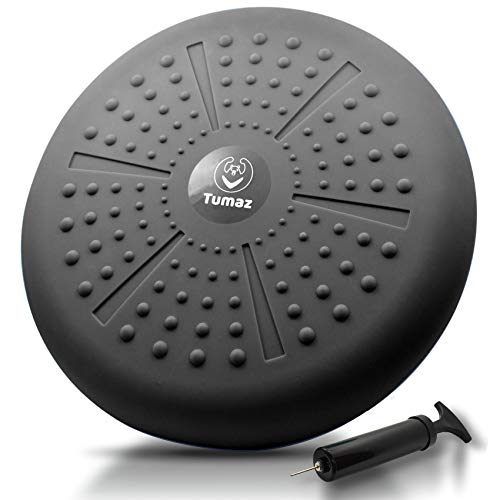
Tumaz Wobble Cushion
An air-filled wobble cushion for active sitting and balance work.
$19.99 Shop Now
Using a Balance Board at a Standing Desk
A rocker board is a popular standing desk companion. Gentle rocking while you work keeps your legs moving and can make standing feel less tiring. Start with 10 to 15 minutes at a time, and stand on the floor if you need to focus on detailed work.
Safety Tips
- Always start near support until you feel confident.
- Keep pets, toys and furniture away from your training area.
- Stop if you feel dizzy or pain in your ankles, knees or back.
- If you have balance problems, a history of falls, or are recovering from injury, ask a healthcare professional before starting.
Quick FAQ
Which balance board is best for beginners?
A rocker board that moves in one direction is usually the easiest place to start. Move on to a wobble board for all-direction challenge.
How long until I see improvement?
Many people notice they feel steadier on the board within a few weeks of regular practice. Short, frequent sessions work best.
Fit Balance Work Into Your Day
You don’t need a dedicated workout to train balance. Keep the board near your TV or desk and step on it for a minute or two during breaks, while brushing up on emails or while waiting for the kettle. Those short, frequent sessions add up and keep the skill fresh.
The Bottom Line
A balance board is a small, low-cost tool that trains your ankles, legs and core while improving everyday stability. Start with a rocker or wobble board near support, follow the 10-minute routine above a few times a week and progress slowly. Add a wobble cushion for active sitting, and you’ll be building balance even while you work.


