

This post contains affiliate links. If you buy through them, we may earn a small commission at no extra cost to you.
A walking pad is easy to love. It slides under a desk or couch, runs quietly, and makes it simple to add steps to your day. But like any treadmill, it needs a little care to stay smooth and quiet. A few minutes of maintenance each month can prevent belt slipping, squeaks, and wear that shortens its life.
This guide covers basic walking pad maintenance: cleaning, belt lubrication, belt tension and alignment, storage, and the warning signs that something needs attention. Always check your own model’s manual first, since the exact steps and recommended products can vary by brand.
Why Walking Pad Maintenance Matters
A walking pad has a motor, a belt that slides over a deck, and rollers at each end. Every step creates friction between the belt and the deck. Dust, pet hair and lint get pulled underneath. Over time, that friction and debris can make the motor work harder, cause the belt to drift, and create noise.
Regular care helps your walking pad:
- Run more quietly, which matters in apartments and home offices.
- Keep a smooth, consistent feel under your feet.
- Avoid uneven belt wear and slipping.
- Put less strain on the motor.
Safety First: Before Any Maintenance
- Turn the walking pad off and unplug it from the wall.
- Remove the safety key or remote if your model uses one.
- Let it sit for a few minutes after use so the motor area can cool.
- Keep the manual nearby, and use only the tools it recommends.
Weekly: Quick Clean
This takes about five minutes and makes the biggest difference:
- Wipe the belt surface with a slightly damp microfiber cloth. Avoid soaking it.
- Wipe the side rails, handlebar (if it has one) and display.
- Vacuum around and underneath the walking pad. Dust and hair under the unit get pulled toward the belt.
- Check that the power cord is not pinched or kinked.
Skip harsh chemicals and spray cleaners directly on the belt or electronics. A mild soap solution on a damp cloth is usually enough.
Walking Pad Treadmill with Handle Bar, 2026 Upgrade Portable Under Desk Treadmill for Home Small with Handles, 3.0HP Walking Pad for Home, 0.6-7.6MPH, 350LBS
A compact walking pad with a handle bar that fits under a desk, a popular choice for home offices.
$99.99 Shop Now
Monthly: Check Belt Tension and Alignment
Belts stretch slightly over time. If the belt is too loose, it can slip or hesitate when you step. If it is too tight, it adds strain to the motor and rollers.
Signs of a loose belt:
- A slipping or jerky feeling when you push off.
- The belt pauses briefly under your foot.
Signs of misalignment:
- The belt drifts toward one side.
- The gap between belt and frame is visibly larger on one side.
Most walking pads have two adjustment bolts at the rear, usually turned with the hex key that came in the box. The general approach many manuals describe is:
- Run the belt at a slow speed with no one on it.
- If it drifts left, turn the left bolt a small amount (often a quarter turn) in the direction your manual specifies, and watch for a minute.
- Make small adjustments, alternating and checking, until the belt runs centered.
- To tighten overall, turn both bolts the same small amount.
Small adjustments are key. Large turns can overtighten the belt quickly.
Every Few Months: Lubricate the Belt
Lubrication reduces friction between the belt and deck. How often you need it depends on your model and how much you walk, so follow your manual’s schedule. Many brands recommend 100% silicone treadmill lubricant, and some include a bottle in the box.
- Unplug the walking pad.
- Loosen the belt slightly if your manual says to, so you can lift the edge.
- Lift one side of the belt and apply a thin line of lubricant to the deck underneath, toward the center.
- Repeat on the other side.
- Re-tighten the belt if you loosened it.
- Plug it in and walk slowly for a few minutes to spread the lubricant evenly.
More is not better. Too much lubricant can attract dirt or make the belt slip.
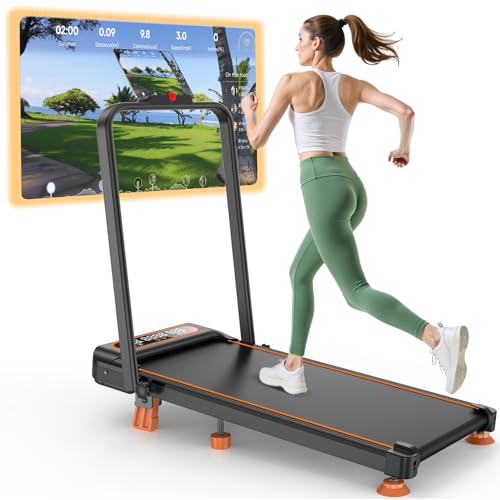
Walking Pad Treadmill with 12% Incline & Dual LED Display, 4 in 1 Walking Pad with Handle Bar, 3.5HP Foldable Under Desk Treadmill, Portable Treadmills for Home 350LBS, 4 Adjustable Incline, RGB Light
A walking pad with up to 12% incline and a handle bar, for walkers who want more challenge from the same footprint.
$199.99 Shop Now
Protect the Floor and the Machine
A mat under your walking pad is a small step that helps in several ways. It protects floors from scratches, reduces vibration and noise, and keeps some dust and carpet fibers away from the belt and motor. On carpet, a firm mat also gives the unit a flatter base.
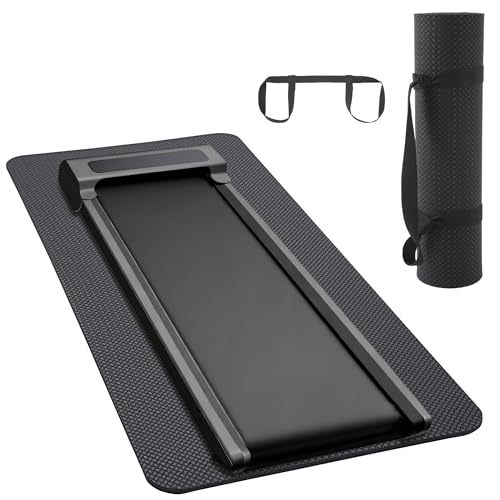
MABOZOO 0.5 Inch Walking Pad Mat, 55×24 Inch Non-Slip Treadmill Mat for Walking Pad, Treadmill, Bike, Exercise, Heavy Duty Workout Floor Protection for Carpet Floors(Black)
A half-inch mat that goes under a walking pad to protect floors and dampen noise.
$36.99 Shop Now
Storage Tips
- Store your walking pad in a dry, room-temperature space. Avoid damp garages or areas near heaters.
- If you store it upright or under furniture, make sure it is stable and the cord is not stretched or pinched.
- Do not stack heavy items on top of the deck.
- Unplug it when you are not using it for long periods.
Warning Signs to Watch For
Stop using the walking pad and check your manual or contact the seller’s support if you notice:
- A burning smell or unusual heat near the motor.
- Grinding, scraping or loud knocking sounds.
- Error codes on the display.
- Frayed edges or visible damage on the belt.
- The belt stopping or hesitating even after tension adjustments.
A Simple Maintenance Checklist
- Every week: Wipe the belt and frame, vacuum underneath, check the cord.
- Every month: Check belt centering and tension; tighten any loose screws.
- Every few months (or per manual): Lubricate the deck.
- Anytime: Watch and listen for warning signs.
Quick FAQ
How often should I lubricate a walking pad?
Follow your manual. It depends on the model and how many hours you walk each week. If the belt feels dry or rough, check whether it is due.
Why is my walking pad squeaking?
Common causes include a dry deck, a belt that is too tight or loose, loose screws, or debris underneath. Clean first, then check tension and lubrication.
Can I use WD-40 on a walking pad?
Many manufacturers advise against general-purpose sprays and recommend silicone treadmill lubricant instead. Check your manual before using any product.
Why does my belt drift to one side?
Uneven walking, an uneven floor or a slight misalignment can all cause drift. Make small adjustments to the rear bolts and make sure the unit sits level.
Do I need a mat under my walking pad?
It is not required, but it helps protect floors, reduce noise and keep dust away from the belt.
The Bottom Line
Walking pad maintenance is quick and simple: wipe and vacuum weekly, check belt alignment and tension monthly, and lubricate on your manual’s schedule. Add a mat, store it in a dry spot, and pay attention to new noises. A few minutes of care keeps your walking pad smooth, quiet and ready for daily steps for a long time.


