This post contains affiliate links. If you buy through them, we may earn a small commission at no extra cost to you.
If you own a set of resistance bands, you already have most of a home gym. The one piece that turns a few stretchy tubes into a proper cable-machine setup is a door anchor. It costs less than a gym day pass, takes ten seconds to install, and suddenly lets you do rows, chest presses, triceps pushdowns and more from any door in your home. Here is how to use one safely, plus a full-body routine you can start today.
What a door anchor actually does
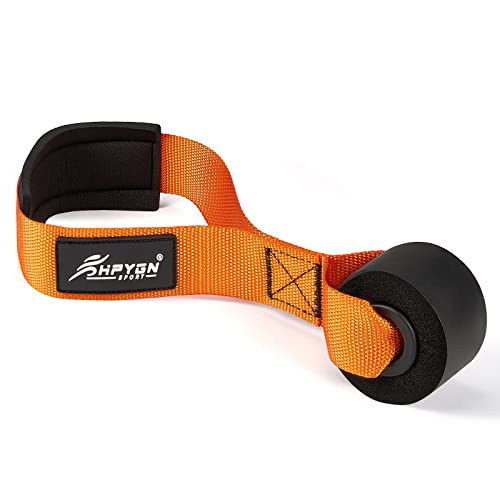
A door anchor is a short strap with a thick padded end. You close the padded end in the gap of a door, and the strap loop on the other side holds your band. That gives the band a fixed point to pull against, just like the pulley on a gym cable machine. By placing the anchor high, at chest height or low on the door, you can change the angle of every exercise and train your back, chest, shoulders, arms, core and legs.
HPYGN Door Anchor for Resistance Bands
Heavy-duty strap that works with tube bands, loop bands and yoga straps.
$9.97 Shop Now
How to set it up safely
A door anchor is very secure when installed the right way, and the right way only takes a moment. Follow these steps every time:
- Use a solid door. Interior doors with a sturdy frame are ideal. Avoid hollow, glass or sliding doors.
- Anchor on the hinge side when you can. Placing the anchor between the door and frame on the hinge side keeps the door from swinging open.
- Close and lock the door. The door should open away from you, so pulling the band presses the door into its frame instead of pulling it open.
- Tell the household. Someone opening the door mid-set is the most common way a workout goes wrong. A quick “I’m working out” note on the other side helps.
- Test before you train. Give the band a few firm tugs before your first rep.
- Check your bands. Replace any band with nicks, cracks or sticky spots.
Three anchor heights, one door
- High (top of the door): lat pulldowns, triceps pushdowns, high-to-low woodchops.
- Middle (chest height): rows, chest presses, Pallof presses, rotational core work.
- Low (bottom of the door): bicep curls, front raises, glute kickbacks, low-to-high woodchops.
Most people keep the anchor at chest height and move it only when an exercise needs a different angle.
The 20-minute door anchor workout
Do each exercise for 12 to 15 controlled reps. Rest 30 to 45 seconds between moves and complete two or three rounds. Pick a band that makes the last three reps feel challenging but clean.
1. Standing row (middle anchor)
Face the door holding both handles, step back until the band is taut, and pull your elbows back past your ribs while squeezing your shoulder blades together. Slowly return. This is the best single move for posture if you sit at a desk all day.
2. Chest press (middle anchor)
Turn away from the door, handles at chest level, and press forward until your arms are straight. Stagger your feet for balance. It works the same muscles as a push-up, with adjustable resistance.
3. Lat pulldown (high anchor)
Kneel facing the door and pull the handles down toward your upper chest, leading with your elbows. Keep your torso tall and avoid leaning back too far.
4. Triceps pushdown (high anchor)
Stand facing the door, elbows pinned to your sides, and push the handles down until your arms are straight. Control the return to keep tension on the back of the arms.
5. Bicep curl (low anchor)
Face the door, step back, and curl the handles toward your shoulders without letting your elbows drift forward.
6. Pallof press (middle anchor)
Stand side-on to the door, hold one handle with both hands at your chest and press it straight out. The band will try to twist you toward the door; your job is to resist. It is one of the best core exercises you can do standing up. Do both sides.
7. Glute kickback (low anchor)
Loop the band around one ankle, face the door, hold the frame lightly for balance and kick the leg straight back, squeezing your glute at the top. Switch legs after each set.
Picking the right bands to pair with it
Any tube band with handles will clip onto a door anchor. If you are buying your first set, look for several resistance levels so you can go lighter for arms and shoulders and heavier for rows and leg work.

Resistance Bands with Handles, 5 Levels
Five resistance levels plus a door anchor and storage pouch in one set.
$21.99 Shop Now

Figure 8 Resistance Bands, Set of 3
Compact bands for arm, shoulder and stretching work, easy to travel with.
$12.89 Shop Now
For floor moves like kneeling pulldowns, a non-slip mat makes things more comfortable on hard floors.

Gaiam Dry-Grip Yoga Mat, 5mm
Cushioned, non-slip surface for kneeling and floor exercises.
$26.78 Shop Now
Common mistakes to avoid
- Standing too close. If the band goes slack at the start of a rep, step back until there is light tension the whole time.
- Letting the band snap back. The slow return is half the exercise. Take two to three seconds on the way back.
- Using one band for everything. Your back is much stronger than your triceps. Match the band to the muscle.
- Training on a door that opens toward you. Always set up so you pull the door closed, not open.
How to progress over time
Bands make progress simple. When 15 reps feel easy, you have three options: step further from the door to add tension, switch to the next band up, or stack two bands on the same anchor. Aim to make one of those changes every week or two and you will keep getting stronger without ever buying heavier equipment.
Quick FAQ
Will a door anchor damage my door? The padded end is soft foam, so a quality anchor should not mark a normal door or frame. Check the edge of the door occasionally if you train daily.
Can I use it with loop bands or a yoga strap? Yes. Most anchors, including the one above, work with tube bands, closed loop bands and straps.
Is it good for physical therapy exercises? Many rehab routines use banded rows and rotations. Follow the plan your therapist gives you and start with the lightest band.
How many times a week should I do this workout? Two or three non-consecutive days is a great start for beginners.
The Bottom Line
A door anchor is one of the cheapest upgrades you can make to a home workout. For under ten dollars it turns any set of resistance bands into a cable-machine-style setup with dozens of exercise options. Set it up on a solid door that closes away from you, start with the seven moves above, and progress a little each week. Browse more bands and accessories in the Empires Solution shop.