

This post contains affiliate links. If you buy through them, we may earn a small commission at no extra cost to you.
You don’t need a gym, a barbell or a lot of time to train your glutes. A set of fabric resistance bands and 15 minutes on your living room floor is enough to build strength in your hips and backside, as long as you show up a few times a week and keep the moves controlled.
This guide explains why fabric bands work so well for glute training, how to pick the right resistance, and gives you a complete 15-minute routine you can start today.
Why Fabric Bands Beat Latex Loops for Glutes
Fabric resistance bands, often called booty bands, are wider and thicker than thin latex mini loops. That difference matters more than it sounds.
Thin latex loops tend to roll up your thighs, pinch the skin and snap out of place halfway through a set. A fabric band has a grippy inner lining that stays put above your knees or around your ankles, so you can focus on the movement instead of fixing the band.
Fabric bands also feel steadier. The tension builds smoothly as you push your knees out, which makes it easier to feel the side of your hips doing the work. For moves like squats, bridges and lateral walks, that steady tension is exactly what you want.
Tribe Lifting Fabric Resistance Bands (5-pack)
Thick fabric bands in five strengths for glutes, legs and hips.
$19.97 Shop Now
How to Choose the Right Resistance
Most fabric band sets come with three to five levels, usually marked by color. Here’s a simple way to use them:
- Light: warm-ups, kickbacks, clamshells and anything done lying on your side.
- Medium: glute bridges, lateral walks and standing abduction.
- Heavy: squats, hip thrusts and sumo squats, where your biggest muscles are working.
If you can’t keep your knees pushed out against the band, it’s too heavy. If you finish 20 reps and feel nothing, move up a level. The right band makes the last three or four reps of each set feel challenging but still clean.
Beginners usually do best starting with a set that includes a few colors, so you can match the band to the exercise instead of using one band for everything.

Booty Bands Set
Budget-friendly fabric bands for legs and glutes in multiple strengths.
$11.99 Shop Now
Before You Start: Form Tips That Matter
Glute training is all about control. A few cues will make every exercise more effective:
- Place the band just above your knees for most moves. Around the ankles makes side-lying and standing moves harder.
- Keep constant tension. Never let your knees cave in or let the band go slack between reps.
- Squeeze at the top. Pause for one second at the top of every bridge and kickback.
- Move slowly. Two seconds up, two seconds down is a good pace.
- Breathe out as you push and breathe in as you return.
The 15-Minute Glute Workout
Do each exercise for the time or reps listed, rest about 20 seconds between moves, and complete the full circuit twice. Total time is roughly 15 minutes including a short warm-up.
Warm-Up (2 minutes)
March in place for 30 seconds, then do 10 bodyweight squats, 10 hip circles each direction and 10 slow glute bridges with no band. The goal is to get your hips moving before you add resistance.
1. Banded Glute Bridge (15 reps)
Lie on your back with knees bent, feet flat and hip-width apart, band above your knees. Press through your heels, lift your hips until your body forms a straight line from shoulders to knees, and push your knees slightly out against the band. Pause, then lower slowly.
2. Banded Squat (12 reps)
Stand with feet a little wider than your hips, band above your knees. Sit your hips back and down as if reaching for a chair, keeping your chest up and knees pressing out. Drive through your whole foot to stand and squeeze your glutes at the top.
3. Lateral Band Walk (10 steps each way)
Get into a quarter squat with the band above your knees or around your ankles. Step sideways with control, keeping tension on the band and your toes pointing forward. Don’t let your feet come all the way together.
4. Donkey Kickback (12 reps each side)
Start on hands and knees, band above your knees. Keeping your knee bent at 90 degrees, press one foot up toward the ceiling until your thigh is level with your back. Lower slowly and keep your lower back from arching.
5. Clamshell (15 reps each side)
Lie on your side with knees bent and stacked, band above your knees. Keep your feet together and lift your top knee as high as you can without rolling your hips back. This one targets the side of your glutes and is great for hip stability.
6. Sumo Squat Pulse (30 seconds)
Take a wide stance with toes turned slightly out. Lower into a deep squat and pulse a few inches up and down while pushing your knees out. Finish by standing tall and squeezing.
After two rounds, cool down with a figure-four stretch and a gentle hip flexor stretch for about 30 seconds each side.
Want More Support? Try a Hip Trainer
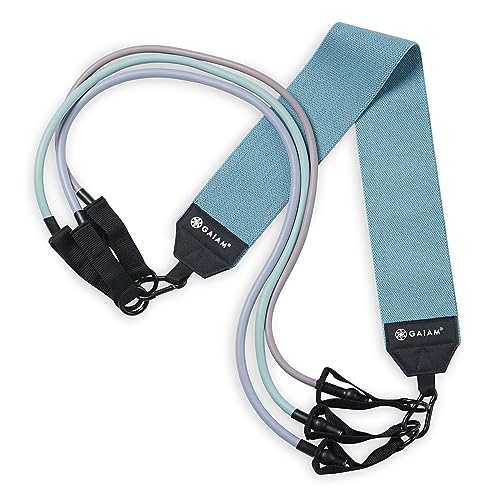
If you’d like a little more structure, a squat band and hip trainer gives you a guided setup for squats and hip work. It’s a good fit if you find it hard to keep your knees out on your own or want a dedicated tool for lower-body days.
How Often Should You Do This Workout?
Three times a week on non-consecutive days is a solid starting point, for example Monday, Wednesday and Friday. Your muscles need recovery time to get stronger, so avoid doing the same hard glute session every single day.
Make it harder over time by:
- Moving to a heavier band.
- Adding 2 to 3 reps to each exercise.
- Doing a third round.
- Slowing the lowering phase to three or four seconds.
Change only one thing at a time, and keep a short note of your bands and reps so you can see your progress week to week.
Common Mistakes to Avoid
- Letting knees cave in: this takes the work off your glutes. Keep pressing out against the band.
- Rushing reps: fast, bouncy reps use momentum instead of muscle.
- Arching your lower back: on bridges and kickbacks, squeeze your glutes and brace your core instead of overextending.
- Using one band for everything: match the resistance to the exercise.
- Skipping the warm-up: cold hips feel tight and limit your range of motion.
Caring for Your Fabric Bands
Fabric bands are easy to look after. Hand wash them in cool water with mild soap when they get sweaty, then let them air dry flat. Avoid the dryer and direct heat, which can weaken the elastic inside. Store them flat or loosely rolled, away from sharp objects, and check the seams every so often.
The Bottom Line
A set of fabric resistance bands is one of the simplest and most affordable ways to train your glutes at home. They stay in place, they’re easy to store, and they let you scale every exercise from beginner to advanced. Start with the 15-minute routine above, stay consistent three times a week, and move up a band when the workout starts to feel easy.
