

This post contains affiliate links. If you buy through them, we may earn a small commission at no extra cost to you.
If you want to do cardio at home, two of the most popular options couldn’t be more different. A jump rope costs very little, fits in a drawer and gives you an intense workout in minutes. A walking pad takes up more space and costs more, but lets you rack up long, easy sessions while you watch TV or work. So which one fits your life?
Here’s a practical comparison to help you choose, plus a sample week using each.
Jump Rope: Fast, Intense and Tiny
Jumping rope is high-intensity cardio. Within a minute or two your heart rate climbs, your calves and shoulders are working, and you’re breathing hard. It also trains coordination, timing and footwork.
Pros:
- Very affordable and extremely portable.
- Short workouts can feel tough and efficient.
- Builds coordination and quick feet.
- Works well outside, in a garage or anywhere with enough ceiling height.
Cons:
- Higher impact on feet, ankles and knees.
- Needs space overhead and around you.
- Can be noisy for downstairs neighbors.
- Has a learning curve for beginners.
Walking Pad: Easy, Low-Impact and Long
A walking pad is a compact, low-profile treadmill designed for walking. You can use it under a standing desk, in front of the TV or for dedicated walking workouts. Models with incline add a hill option to make sessions harder without running.
Pros:
- Low impact and gentle on joints.
- Easy for beginners. If you can walk, you can use it.
- You can multitask: calls, shows, podcasts or work.
- Great for building daily step counts.
- Usually quiet and folds or slides under furniture.
Cons:
- Costs much more than a jump rope.
- Needs floor space and a power outlet.
- Lower intensity unless you use incline or brisk speeds.
- Not built for running on most models.
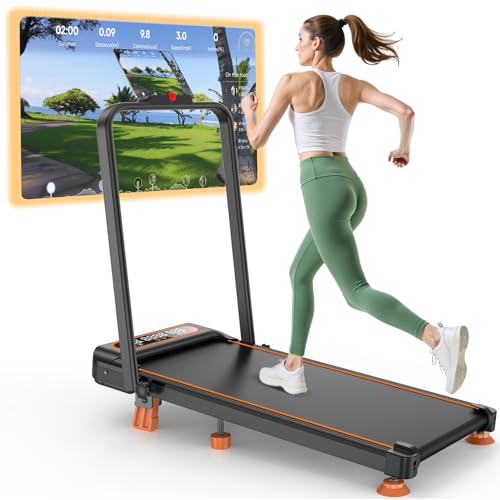
Walking Pad Treadmill with Incline
Under-desk walking pad with adjustable incline and handle bar.
$199.99 Shop Now
Side-by-Side Comparison
- Intensity: jump rope is high; walking pad is low to moderate, higher with incline.
- Impact: jump rope is high impact; walking pad is low impact.
- Time: jump rope suits short 10- to 15-minute sessions; walking pad suits 30 minutes or more.
- Skill: jump rope takes practice; walking pad has almost no learning curve.
- Space: jump rope needs height and clearance; walking pad needs floor space.
- Noise: jump rope can be loud; walking pads are usually quiet.
- Cost: jump rope is very low; walking pad is a bigger investment.
Which One Should You Choose?
Choose a jump rope if you:
- Have little time and want quick, intense workouts.
- Are on a tight budget.
- Have healthy joints and enjoy a challenge.
- Have a garage, patio or ground-floor space with high ceilings.
Choose a walking pad if you:
- Work from home and sit most of the day.
- Are a beginner or returning to exercise.
- Prefer low-impact cardio or have achy knees.
- Live in an apartment and need a quiet option.
- Want to boost your daily steps while doing other things.
Or use both
The two work well together. Walk on the pad on most days for easy, low-impact movement, and add two short jump rope sessions a week for intensity. That mix gives you both steady activity and harder intervals.
Sample Week Using Both
- Monday: 30-minute walk on the pad.
- Tuesday: 10-minute jump rope intervals, 30 seconds on and 30 seconds off.
- Wednesday: 30 to 45 minutes of easy walking during work.
- Thursday: 25-minute incline walk.
- Friday: 10-minute jump rope intervals.
- Saturday: long, easy walk on the pad or outside.
- Sunday: rest or gentle stretching.
Smart and Digital Jump Ropes
If you like tracking your workouts, a digital or smart jump rope counts your jumps for you. That makes it easy to set goals, such as a certain number of jumps per session, and see your progress over time without counting in your head.

Beginner Tips for Each
Jump rope: stand tall, keep elbows close to your sides, turn the rope with your wrists and jump just high enough to clear it. Start with 20 to 30 seconds at a time and rest as needed. Jump on a mat or other forgiving surface, wear supportive shoes and build up slowly to protect your calves and ankles.
Walking pad: start slow, wear athletic shoes, stand tall without holding on, and build up time before speed or incline. Use the safety features and remote, and step off carefully when you finish.
Quick FAQ
Which burns more calories?
Minute for minute, jumping rope is usually more intense. But walking sessions tend to last much longer, so total activity can end up similar or higher. The best choice is the one you’ll do consistently.
Is jumping rope safe for apartments?
It can be noisy for neighbors below. A thick mat helps, and so does jumping at reasonable hours. If noise is a big concern, a walking pad is the quieter option.
Think About Your Real Day
The right choice often comes down to your schedule. If your day is packed and you only have 10 free minutes, a jump rope lets you get a hard session in quickly. If you spend hours at a desk, a walking pad turns that time into movement without needing extra time at all. Picture a normal weekday and ask which tool you’d actually reach for. That answer usually points to the right buy, and you can always add the other one later.
The Bottom Line
A jump rope is the best pick for fast, intense, low-cost cardio if your joints and space allow it. A walking pad is the better choice for low-impact, all-day movement, especially if you work from home or live in an apartment. Many people get the best of both by walking most days and jumping rope a couple of times a week.


