

This post contains affiliate links. If you buy through them, we may earn a small commission at no extra cost to you.
If you want to walk or run at home, you’ll quickly run into two very different machines: the full-size treadmill and the walking pad. They look similar in photos, but they’re built for different people, different homes and different goals.
This guide breaks down the real differences in plain English so you can buy once and actually use what you bought.
The Short Version
A walking pad is a flat, low-profile belt designed mostly for walking. It’s light, slides under a couch or bed, and often has no rails or a fold-down handle. A treadmill is a larger machine with a console, side rails, a longer and wider deck, and usually a stronger motor for jogging and running.
If you mostly want to add steps during the workday, a walking pad is usually enough. If you want to run, train for a race, or do serious incline work, a treadmill makes more sense.
Walking Pad vs Treadmill: Key Differences
- Speed: Many walking pads top out around walking or light jogging speeds. Treadmills are built for higher speeds and longer runs. Always check the listed top speed before buying.
- Deck size: Walking pads have shorter, narrower belts. That’s fine for walking, but a running stride needs more room front to back.
- Rails and console: Treadmills have side rails and a control panel at hand height. Walking pads often use a remote, an app, or a small display on the base.
- Incline: Some walking pads now offer incline, but full treadmills generally have more incline levels and adjust them automatically.
- Storage: Walking pads are made to be stored flat or on their side. Treadmills may fold up, but they still take up a permanent footprint.
- Price: Walking pads are usually the cheaper option. Full treadmills cost more, but you’re paying for size, power and features.
Who Should Buy a Walking Pad
A walking pad is a strong fit if most of these sound like you:
- You live in an apartment or a small room with no dedicated gym space.
- You want to walk while working at a standing desk.
- Your main goal is more daily movement, not running fast.
- You need to put the machine away every day.
- You’re on a tighter budget.
Walking pads shine for “background” exercise. Thirty minutes of easy walking during calls or while watching a show adds up, and the low barrier to starting is the real benefit.
Walking Pad Treadmill with Handle Bar, 3.0HP, 0.6–7.6 MPH
A compact walking pad with a fold-up handle bar for walking and light jogging in small spaces.
$99.99 Shop Now
Who Should Buy a Treadmill
A full treadmill is the better choice if:
- You want to jog or run regularly, not just walk.
- You’re tall or have a long stride and need more deck length.
- You want side rails for balance and a console within reach.
- You like structured workouts with automatic incline changes.
- You have a spot where the machine can stay set up.
Treadmills also make more sense when more than one person in the house will use them for different kinds of workouts.
The Middle Ground: Walking Pads With Handles and Incline
The line between the two categories has blurred. Many newer walking pads come with a fold-up handle bar, and some add incline. These “hybrid” models are a good option if you want something that stores flat but still feels a bit more like a treadmill when it’s set up.
A handle bar is useful if you’re new to walking on a moving belt, if you want something to hold while changing speed, or if you like a display at eye level. When the handle folds down, the machine slides away like a regular walking pad.
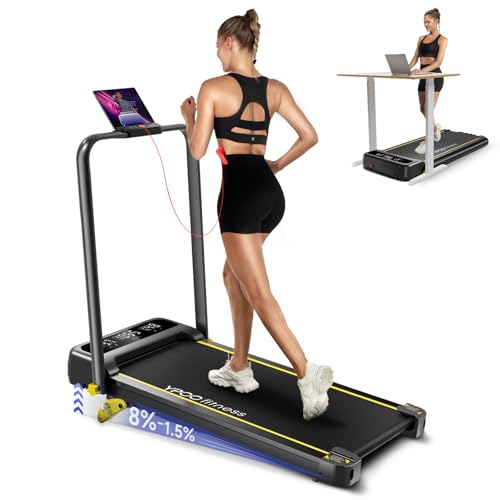
Foldable Treadmill with 3-Level Incline and Handle Bar
A middle-ground folding machine with a manual incline, handle bar, remote and app support.
$179.99 Shop Now
Is Incline Worth It?
Walking on an incline makes the same speed feel harder, which means you can get a tougher workout without running. That’s helpful if you have neighbors below you, prefer low-impact exercise, or simply don’t enjoy running.
When comparing machines, look at whether the incline is manual or automatic and how many levels it offers. Manual incline usually means you set it before you start. Automatic incline changes with a button, which is handier for interval-style workouts.
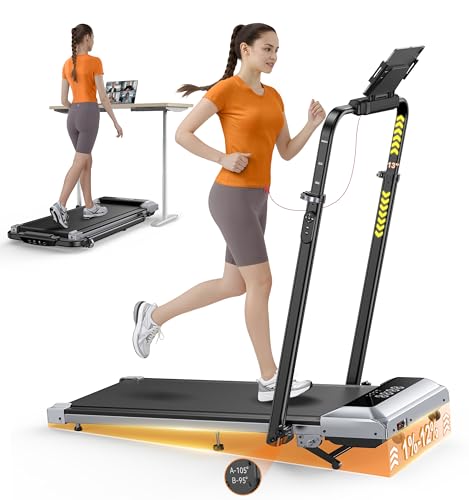
Walking Pad Treadmill with 12% Incline, 6-in-1 Folding Design
A folding walking pad with 1%, 6% and 12% incline settings for hill-style walking at home.
$237.48 Shop Now
Space and Noise: What to Measure Before You Buy
Before you order anything, grab a tape measure and check:
- Floor space while in use. Add room behind the machine in case you step off the back.
- Storage space. Measure the gap under your couch or bed if you plan to slide a walking pad there.
- Ceiling height. On a treadmill, especially with incline, you’ll be standing higher than usual.
- Outlet location. Plan to plug the machine directly into a wall outlet rather than a long chain of extension cords, and follow the manufacturer’s instructions.
- Your floor. A mat under the machine can help protect floors and cut down on vibration.
If you live upstairs from someone, walking will always be quieter than running on any machine. That alone pushes many apartment dwellers toward a walking pad.
Motor, Weight Capacity and Belt: Reading the Specs
Product listings throw a lot of numbers at you. Here’s what matters most:
- Weight capacity: Choose a machine rated comfortably above your body weight.
- Top speed: Make sure it matches what you’ll actually do. Don’t pay for running speeds if you only walk.
- Belt size: Longer and wider belts feel more stable, especially at higher speeds.
- Controls: Remote, app or console. Pick the one you’ll find easiest to use every day.

Sunny Health & Fitness Premium Smart Treadmill with Auto Incline
A full treadmill with 12 automatic incline levels and SunnyFit app connectivity for regular runners.
$549.99 Shop Now
A Simple Starter Routine for Either Machine
Whichever you choose, start easy. Here’s a 25-minute walking routine that works on both:
- Minutes 0–5: Easy pace to warm up.
- Minutes 5–10: Brisk pace where talking takes a little effort.
- Minutes 10–20: Alternate 1 minute faster (or with incline, if you have it) and 1 minute easy.
- Minutes 20–25: Slow down gradually to cool off.
Do this three or four times a week, then add minutes or incline once it feels comfortable.
Quick FAQ
Can you run on a walking pad?
Some walking pads support light jogging, but most are designed for walking. Check the top speed and the manufacturer’s guidance before running on one.
Can a walking pad replace a treadmill?
For walkers, yes. For runners, usually not, because of the shorter deck and lower top speed.
Do I need a mat?
A mat isn’t required, but it can help protect your floor, reduce vibration and keep dust out of the motor area.
Which is easier to store?
Walking pads, by a wide margin. Most can lie flat under furniture or stand against a wall.
Which is better for working from home?
A walking pad paired with a standing desk is the most common setup, since it fits under the desk and runs at comfortable walking speeds.
The Bottom Line
Pick a walking pad if your goal is more daily steps in a small space. Pick a full treadmill if you want to run, need a bigger deck, or want rails and automatic incline. If you’re somewhere in between, a walking pad with a handle bar and incline gives you a bit of both without taking over your living room. The best machine is the one you’ll step on most days, so choose the one that fits your space and your routine.


