
This post contains affiliate links. If you buy through them, we may earn a small commission at no extra cost to you.
If you want stronger legs and glutes at home without a squat rack, two small tools come up again and again: ankle weights and ankle resistance bands. Both strap around your lower legs, both are cheap, and both fit in a drawer. But they work in different ways, and one may suit your goals better than the other.
Here’s a clear comparison, plus a leg workout you can do with either one.
How Ankle Weights Work
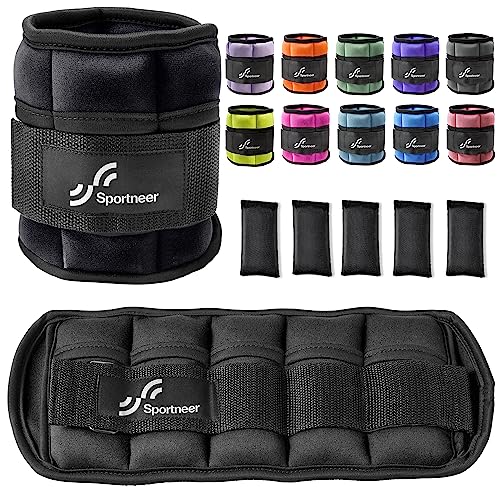
Ankle weights are padded cuffs filled with weight that wrap around your ankles with a hook-and-loop strap. Some are adjustable, letting you add or remove small weight pouches.
The resistance comes from gravity. Lifting your leg against that extra weight makes moves like leg raises, kickbacks and marches harder. The load stays the same through the whole movement, which is simple and easy to understand: heavier cuffs, harder exercise.
Sportneer Adjustable Ankle Weights
Removable sandbags let you adjust from 2 to 10 lb per pair.
$30.96 Shop Now
How Ankle Resistance Bands Work
Ankle resistance bands use elastic tubing or loops attached to padded cuffs. You either strap both ankles together with a band between them or anchor the band to a door or post and attach the cuff to one ankle.
The resistance comes from stretch. The farther you move, the harder the band pulls back, so the exercise gets toughest at the end of the movement, right where your glutes squeeze the most. Bands also resist you in any direction, not only against gravity, which opens up side-to-side and standing kickback moves that weights can’t load the same way.
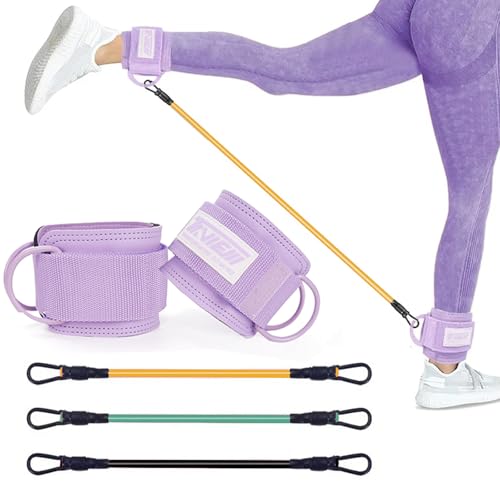
Ankle Straps Resistance Bands with Cuffs
Ankle cuffs with resistance bands for kickbacks and hip training.
$24.99 Shop Now
Ankle Weights vs Ankle Bands: Side by Side
- Resistance type: weights give steady load from gravity; bands give increasing tension as they stretch.
- Best moves: weights shine in lying and kneeling leg raises and walking; bands shine in standing kickbacks, side steps and abduction.
- Direction: weights only resist upward movement; bands can resist in any direction when anchored.
- Adjusting difficulty: weights adjust by adding pouches or buying heavier pairs; bands adjust by switching band strength or standing farther from the anchor.
- Portability: both pack small, but bands are usually lighter to travel with.
- Noise and space: both are quiet and apartment-friendly.
Which One Should You Choose?
Pick ankle weights if you:
- Like simple floor-based leg and glute work, such as Pilates-style routines.
- Want a tool for leg raises, donkey kicks and fire hydrants.
- Prefer a steady, predictable load.
Pick ankle resistance bands if you:
- Want to do standing glute kickbacks and hip abduction like the cable machine at the gym.
- Like feeling the hardest squeeze at the top of the move.
- Want something very light to travel with.
Many people end up owning both, because they’re inexpensive and complement each other. Weights cover floor work, bands cover standing work.
A Note on Walking With Ankle Weights
Some people wear ankle weights on walks or while doing chores. If you try this, start very light and keep sessions short, since extra weight at the ankle changes how your legs swing and can strain the knees and hips. Many trainers prefer using ankle weights for controlled exercises instead of long walks. If you have joint issues, check with a healthcare professional first.
A 20-Minute Leg and Glute Workout
This routine works with either ankle weights or ankle bands. Do each exercise on both sides, rest 20 to 30 seconds between moves, and complete two or three rounds.
- Standing glute kickback: 12 to 15 reps per leg. Hold a chair, keep a slight bend in your standing knee and push your working leg straight back without arching your lower back.
- Standing side leg raise: 12 to 15 reps per leg. Lift your leg out to the side, toes pointing forward, and lower slowly.
- Donkey kick: 12 reps per leg. On hands and knees, press your foot up toward the ceiling with your knee bent.
- Fire hydrant: 12 reps per leg. On hands and knees, lift your bent knee out to the side.
- Side-lying leg raise: 15 reps per leg. Lie on your side and lift your top leg slowly.
- Glute bridge: 15 reps. With bands, loop them above your knees if your set allows; with weights, simply add a pause at the top.
Move slowly and keep your core tight. Every rep should feel controlled, not swung.

How to Progress Safely
- Start light. Small muscles around the hips tire quickly.
- Add reps before adding resistance.
- Increase weight or band strength in small steps.
- Train legs and glutes two or three times a week, with rest days in between.
- Stop if you feel sharp pain in your knees, hips or lower back.
Care Tips
Wipe cuffs with a damp cloth after workouts and let them air dry. For bands, check the tubing and clips regularly for cracks or wear, and replace them if anything looks damaged. Store both away from heat and direct sunlight.
Quick FAQ
Can beginners use ankle weights?
Yes, start with a light pair and focus on slow, controlled moves. Light weight with good form is more effective than heavy weight with swinging.
Are ankle bands safe to anchor to a door?
Use only the door anchor that comes with your set, place it on the hinge side of a closed door, and test it with a gentle pull before each workout.
The Bottom Line
Ankle weights and ankle resistance bands both build stronger legs and glutes at home. Weights are best for floor exercises with a steady load, while bands are better for standing kickbacks and side work with tension that peaks at the top. If you can only pick one, choose based on the exercises you enjoy most. If you can, get both and use them together.


