

This post contains affiliate links. If you buy through them, we may earn a small commission at no extra cost to you.
Dumbbells are one of the most useful pieces of home gym equipment you can own. But when you start shopping, you’ll quickly see two very different styles: colorful neoprene dumbbells and heavier rubber-coated dumbbells. They both do the same basic job, yet they’re built for different kinds of training.
This guide breaks down the differences so you can buy the right pair the first time.
What Are Neoprene Dumbbells?
Neoprene dumbbells have an iron core covered in a soft neoprene coating. They usually come in light weights and bright colors, which makes it easy to grab the right pair quickly. The coating feels soft in the hand, gives a decent grip and is gentler on floors if a dumbbell rolls or gets set down.
Because they’re light and compact, neoprene dumbbells are popular for toning workouts, aerobics, Pilates, walking routines, physical therapy exercises and beginner strength work.
CAP Barbell Neoprene Dumbbells
Comfortable neoprene-coated weights in many colors and sizes.
$14.99 Shop Now
What Are Rubber-Coated Dumbbells?
Rubber-coated dumbbells also have a metal core, but the heads are wrapped in thicker rubber, and the handle is usually steel with a knurled, textured grip. They’re often hexagonal so they don’t roll away, and they come in a much wider range of weights, including heavy pairs.
These are the dumbbells you’ll see in most gyms. They’re made for traditional strength training: presses, rows, lunges, deadlifts and curls with weights that challenge bigger muscles.

Neoprene vs Rubber-Coated: Key Differences
- Weight range: neoprene is usually limited to light weights; rubber-coated covers light through heavy.
- Grip: neoprene is soft and smooth; rubber-coated has a textured metal handle that stays secure when your hands get sweaty.
- Shape: many neoprene dumbbells are designed not to roll; rubber hex dumbbells have flat sides that keep them in place.
- Floor protection: both coatings protect floors better than bare iron, and rubber is more durable for repeated set-downs.
- Durability: neoprene can wear or peel over time with heavy use; rubber coatings tend to hold up longer.
- Smell: new rubber dumbbells can have a rubber smell at first that fades with time and airflow.
- Price: light neoprene pairs are very affordable; heavier rubber dumbbells cost more because there’s more metal involved.
Which Should You Buy?
Choose neoprene dumbbells if you:
- Are new to exercise and want light weights for toning and form practice.
- Do aerobics, dance cardio, barre or Pilates-style workouts.
- Want something colorful, quiet and easy to store in a living room.
- Are following a gentle routine after time off from exercise.

Yes4All 5 lb Neoprene Dumbbells (pair)
Non-slip grip, great for light total-body workouts.
$11.50 Shop Now
Choose rubber-coated dumbbells if you:
- Want to build real strength and muscle over time.
- Plan to do heavier moves like goblet squats, Romanian deadlifts, rows and presses.
- Want a grip that stays secure as you sweat.
- Are building a long-term home gym.
Plenty of people use both. A pair of light neoprene dumbbells is perfect for shoulder raises, arm circuits and warm-ups, while rubber-coated dumbbells handle the heavy lifts.
How Heavy Should Your Dumbbells Be?
There’s no single answer, because it depends on the exercise and your experience. A simple test works well: pick a weight where you can complete 10 to 12 reps with good form and the last two reps feel hard. Smaller muscles, like shoulders and arms, usually need lighter weights than legs and back.
That’s why beginners often benefit from having two or three different weights. Light for shoulders and arms, medium for chest and back, heavier for legs.
Is a Dumbbell Set With a Rack Worth It?
If you’re sure you’ll train regularly, a set of rubber dumbbells with a rack keeps several weights organized and off the floor. It saves space compared to scattered pairs and makes it easy to move between weights during a workout. It’s a bigger upfront purchase, so it makes the most sense once strength training is a regular habit.
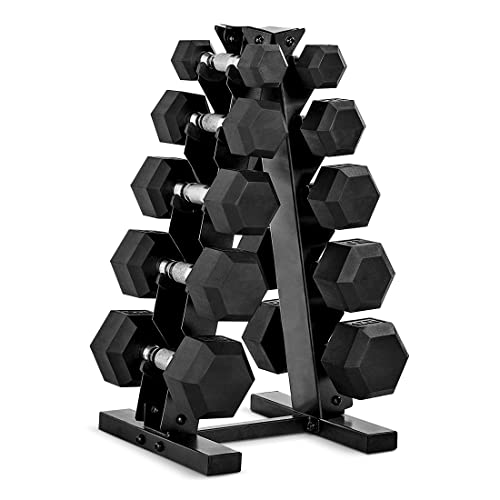
CAP Barbell Rubber Coated Dumbbell Set with Rack
100, 150 or 210 lb sets with a vertical storage rack.
$189.99 Shop Now
A Simple Dumbbell Workout for Beginners
Try this full-body routine two or three times a week. Do 2 to 3 sets of 10 to 12 reps for each move:
- Goblet squat
- Bent-over row
- Floor press or chest press on a bench
- Romanian deadlift
- Shoulder press
- Bicep curl into overhead triceps extension
Rest 45 to 60 seconds between sets. Use lighter neoprene dumbbells for the shoulder and arm moves and heavier rubber dumbbells for squats, rows and deadlifts if you have both.
Care and Storage Tips
- Wipe dumbbells after use to remove sweat.
- Store them on a rack or mat, not on bare hardwood.
- Keep neoprene dumbbells away from direct sunlight and heat to help the coating last.
- Air out new rubber dumbbells in a ventilated room if they have a smell.
- Set dumbbells down gently instead of dropping them.
Quick FAQ
Do neoprene dumbbells slip when your hands sweat?
The soft coating grips well for light work, but during long, sweaty sessions some people find it gets slick. Wipe your hands and the handles between sets, or use a textured rubber dumbbell for heavier lifts.
Can I build muscle with light neoprene dumbbells?
Light weights are great for learning form and for smaller muscles like shoulders. To keep building strength in bigger muscles such as legs and back, you’ll eventually need heavier weights or more challenging variations.
Are rubber dumbbells better for apartments?
Both styles are quieter and more floor-friendly than bare iron. Put a mat under your workout area and set weights down gently to keep noise low for neighbors.
Hex or round heads?
Hex heads stay put on the floor and are handy for moves like renegade rows. Round heads look sleek on a rack but can roll. For most home gyms, hex is the practical pick.
The Bottom Line
Neoprene dumbbells are ideal for light, colorful, beginner-friendly workouts and toning routines. Rubber-coated dumbbells are better for serious strength training and heavier weights. Choose based on how you plan to train, and if your budget allows, combine a light neoprene pair with a few heavier rubber dumbbells for a flexible home setup.


